


The origin of coffee
Ethiopia is considered the birthplace of coffee. The oldest myth about where coffee was discovered features the Ethiopian goat herder Kaldi.
The myth tells that Kaldi had wandered far away with his goats. He always slept with his herd at night. But one night, he noticed that the goats were still awake and couldn't fall asleep. They were very active and jumping around. The goatherd initially thought his goats were possessed, but his curiosity soon got the better of him. Kaldi discovered that they had been eating small red berries from a green bush, and the goatherd tasted some of them too.
The berries had the same stimulating effect on him as on his goats. Kaldi took the berries back to his village, and soon the power of coffee became known throughout the region. In Ethiopia, the berries and leaves were used for their stimulating properties. Nomadic pastoralists mixed the coffee berries with fat and spices to gain energy during their travels. The seeds of the coffee cherry, the coffee beans, were spat out. As a result, there is a wide mix of heirloom varieties, and the coffee beans from Ethiopia are often irregular in size and shape. The discoverers of the coffee plant were most likely members of the nomadic Oromo tribe, which still comprises the majority of Ethiopia's inhabitants.
Coffee production in Ethiopia
Coffee cultivation began around 1500. Before that, coffee was harvested from wild coffee plants. Around 1800, Ethiopia began cultivating coffee on a commercial scale. However, many coffee farmers still harvest coffee from forests where the plants grew wild. The subsequent history of Ethiopian coffee cultivation has been quite turbulent.
During the turbulent political developments and unstable economic climate, the coffee sector suffered a significant blow. When the price of coffee plummeted in 2003 and no longer covered production costs, many coffee farmers stopped growing coffee and moved to the cities to find alternative sources of income. Despite all the challenges, coffee remains Ethiopia's largest export product, and the country ranks fifth among the world's coffee producers.
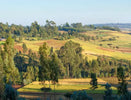
The Arabica coffee bean grows wild in Ethiopia, the only country in the world where it is harvested primarily by subsistence farmers. Most of Ethiopia consists of the vast and relatively fertile Ethiopian Highlands. Although Ethiopia is located near the equator, the country's altitude gives it a relatively temperate climate, with the exception of the lower Danakil Desert and the Ogaden, which have a hot and dry climate.
picture.
More than half of the coffee produced in the country is consumed by Ethiopians themselves. The coffee ceremony is a social event where the host roasts the green coffee beans over charcoal and prepares the coffee in a jebena. Incense is burned during the serving. The brewed coffee is called buna and is brewed three times, resulting in three different cups of coffee.
Coffee regions in Ethiopia
Coffee still grows wild in Ethiopia. According to UNESCO, there are nearly 5,000 wild varieties in Ethiopia, and we therefore distinguish coffee by region, altitude, and cupping score. There are six major coffee regions in the country, but some regions have their own sub-regions that carry their own trademarks. A well-known coffee-growing area is located in the southwest of the country. The small Yirgacheffe area in the Sidamo region is known for its washed coffee. Coffee from this area grows at an altitude of approximately 2,000 meters. This coffee, from which the pulp is removed and the beans are washed before drying, is considered one of the best coffees in the world.
Sidamo |
Guji |
Harar |
| In these Sidamo highlands, coffee is labeled SHG, which stands for Strictly High Grown. This designation is given to coffee grown at an altitude between 1200 and 1600 meters. Coffees from this region often have a bright and complex flavour, with pleasant notes of lemon, berry, and floral aromas. Naturally processed coffees from Ethiopia are very fruity. Their aromas are primarily berry-like and very sweet. | Further northwest lies Guji. The heirloom varieties grown here produce a flavour profile distinct from other coffees from Oromia Province. Guji coffee has aromas of dark chocolate, floral notes, and a sweet base. | The Harar region, along with Sidamo, is also one of the oldest coffee-producing regions. In the eastern highlands, the coffee has aromas of fruit, wine, and milk chocolate. Unlike Sidamo coffee, Harar coffee has lower acidity and a fuller body. |
Arabica coffee beans
The Arabica grown in the birthplace of coffee can be divided into three categories.
- Longberries are the largest coffee beans and are often considered the best quality coffee beans in value and flavour.
- Shortberries are smaller than longberries, but are considered a high-quality coffee bean in the eastern part of the country where this coffee originates.
- The mocha variety is a highly prized coffee. Mocha from the Harar region is known for its peaberry beans, which have a complex, spicy aroma with notes of citrus.
As the birthplace of coffee, Ethiopia has a rich history, something you can certainly taste in the unique flavours of the coffee beans that come from the country.
Curious about Kaldi coffee made with Ethiopian coffee beans? Then visit a Kaldi near you or browse our Traditional Ethiopian coffee beans .
Other blog posts
-

Why the freshest roast date doesn't always result in the tastiest coffee
Why the freshest roast date doesn't always result in the tastiest coffee -

-


